JulienMastromonaco
Web solutions builder, Node.js & TypeScript
I bridge what people need and the code that answers it. From the first conversation to production, I build web applications that go the distance.
I taught myself to code. Everything else, I owe to other people.
I live in Lyon and work remotely, currently at Secrecy, which publishes a data encryption SDK. Before that came Digimat and its NFT marketplace, where Web2 meets Web3, and earlier still, a medtech company that 3D-printed prostheses.
My craft was forged in the field, within teams, on products in production as well as on my own projects. Yet I do not see myself as someone who only writes code. What I love is grasping what a person expects, putting the right words to it, then making it real.
Outside work, I code in Rust for the pleasure of it, I run a lot and I never tire of the mountains, a world you will also find in OnTrace. Berlin, my old dog, takes up a good part of my free time too. He means the world to me, and every moment by his side is precious.
My next chapter will be more human. I want to bring a team together, champion a product’s vision or lead the commercial relationship with service providers.
Understand first, build second
A good application rarely starts with code. It starts with a conversation, and with genuine curiosity about the person across the table.
Listen
I start by asking questions. The context, the constraints, the people involved, everything matters before we talk technology.
Understand
Behind a request there is often a deeper need, sometimes hard to put into words. I look for it, then rephrase it until it is clear to everyone.
Translate
I turn that need into simple technical choices, and explain them in words anyone can follow, developer or not.
Deliver
I move forward step by step and adjust with you as feedback comes in, until the result lives up to expectations.
Code is only a means. What interests me is the people who use it.
Background
Since 2017, from the PHP of my early days to the Node.js and TypeScript of today.
2022
CurrentSecrecy, Remote
Node.js & TypeScript developer, since august 2022
Publisher of an SDK that encrypts and secures data.
I write Node.js and TypeScript every day, and also look after part of the CI/CD.
- Node.js
- TypeScript
- CI/CD
2022
Digimat, Remote
Node.js & TypeScript developer, feb. to aug. 2022
NFT marketplace.
The same Node.js and TypeScript foundation, plus the exchanges between a classic web application and the blockchain.
- Node.js
- TypeScript
- CI/CD
- Web3
2018
OneOrto, Saint-Genis-Laval
Junior developer, oct. 2017 to jan. 2018
3D printing of prostheses and tooling kits.
I added features to the company’s CRM, fixed its bugs, optimised it as a whole and ran database migrations.
- PHP
- Symfony
- MySQL
2017
Clickdev, Lyon
Developer, mar. to jul. 2017
A first team project, in scrum. A complete intranet, from database design to user and admin accounts, through support tickets and a vote to prioritise what came next.
- PHP
- Symfony
- Scrum
Skills
Tools change, and so does the way I use them. Today, coding agents assist me daily, in an agentic workflow.
What I take care of
- Testing
- I test what I ship, so that everyone sleeps well after a release.
- Documentation
- I write the documentation I would have liked to find when joining a project.
- Maintainability
- A clear architecture, hexagonal above all, and clean code, so an application can grow without being rewritten.
- Learning
- I read, experiment and exchange ideas a lot. That is how I learned, and I have never stopped.
Personal projects
What I make when nobody asks me to. A web application to prepare mountain outings, and a Rust library.
OnTrace
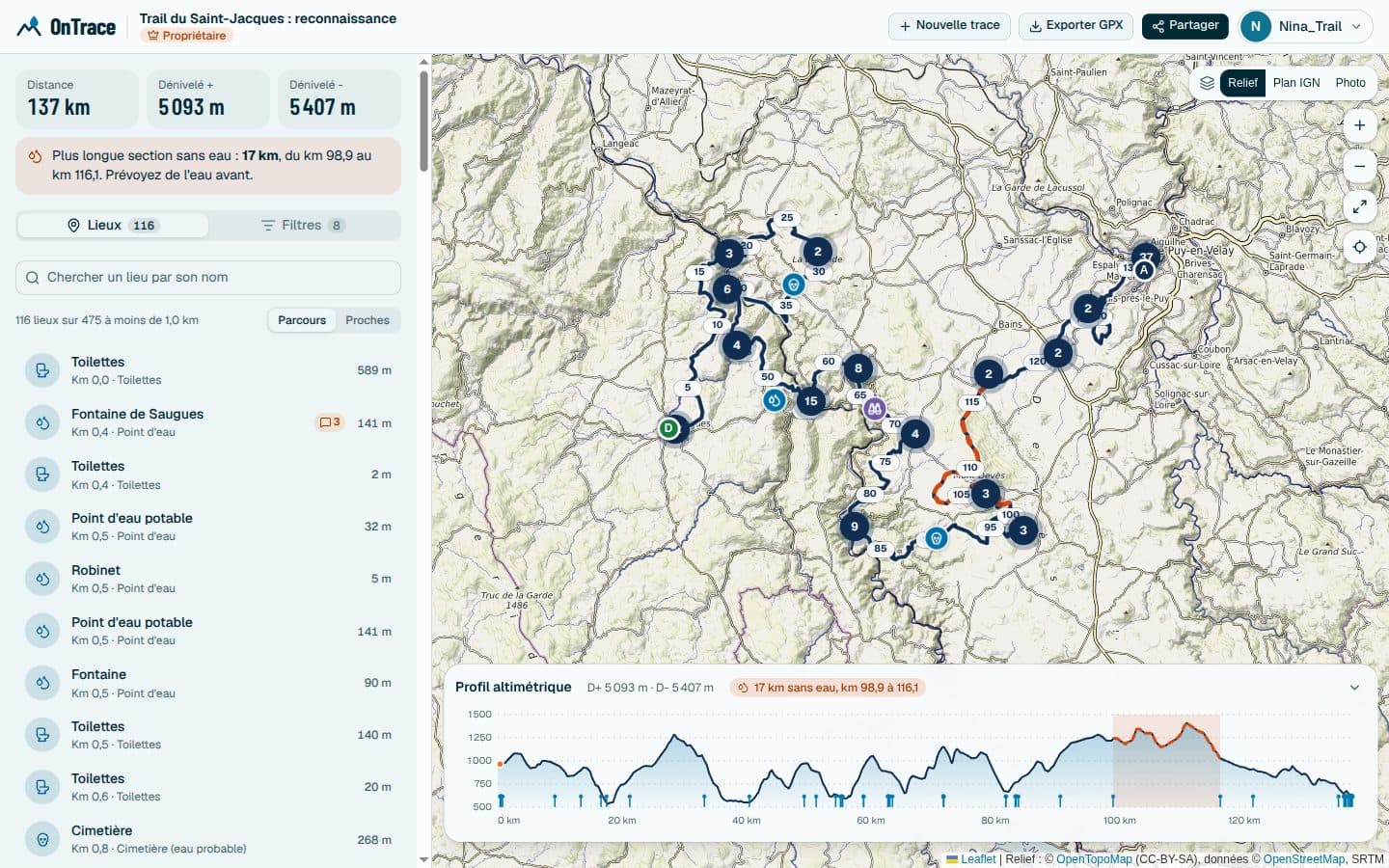
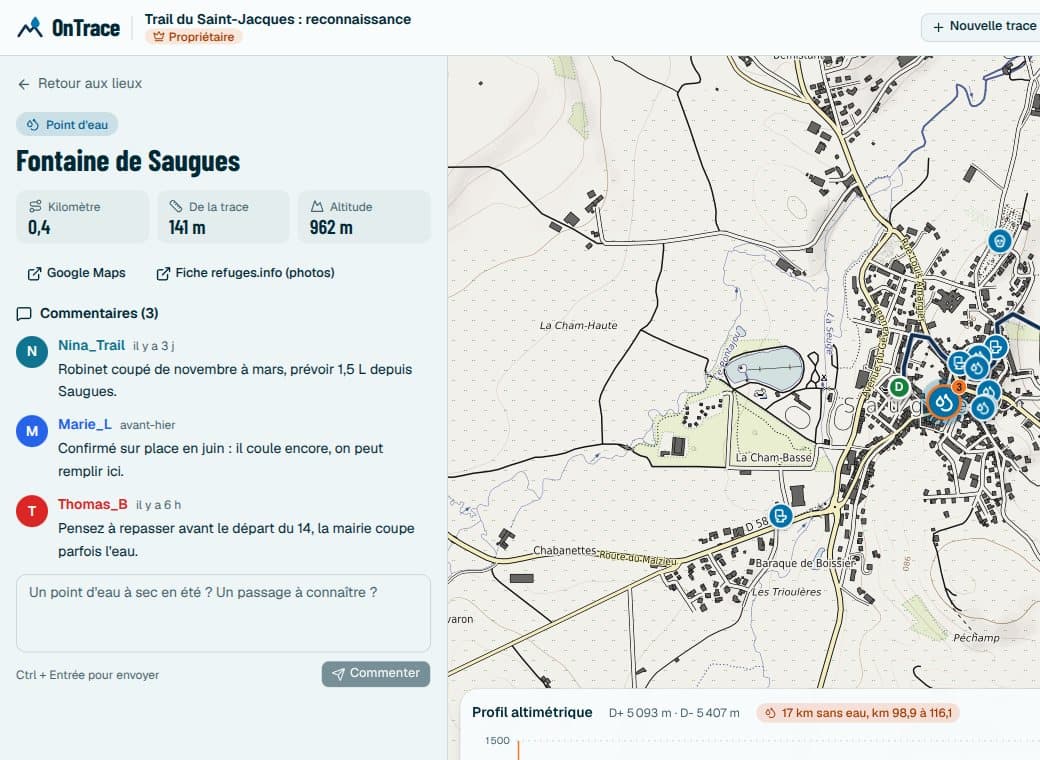
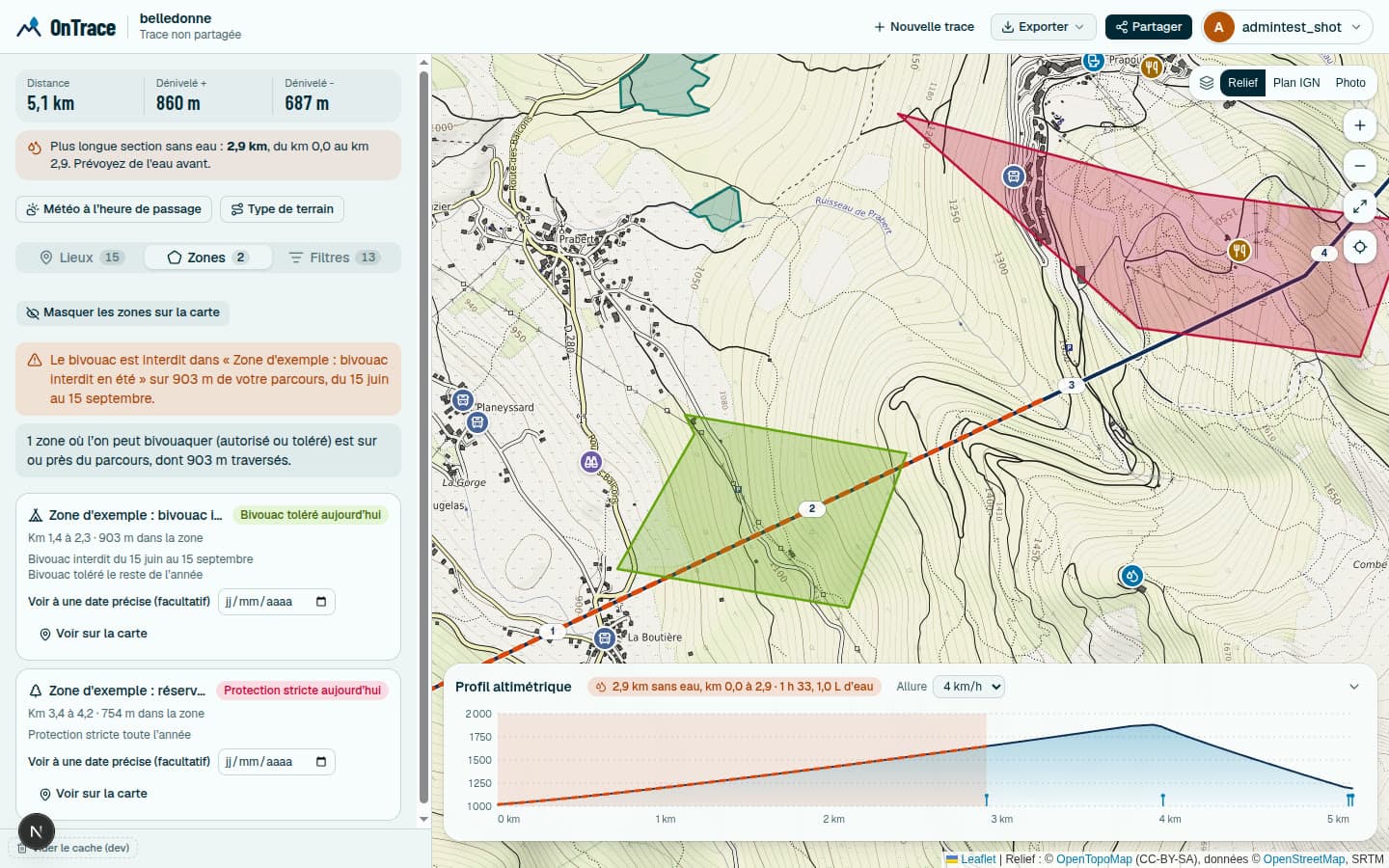
Every water point on your route, before you leave.
Import a GPX file and OnTrace places the water points, huts and supplies along your route, with the kilometre mark of each. Then share the route to prepare it with your team.
- React
- Tailwind
- shadcn/ui
- Mapping
- GPX
- Hiking
net-adds
IP ranges, networks and iterators for Rust.
A Rust library to represent IPv4 and IPv6 ranges and networks, parse them from text such as 192.168.0.22/24, then iterate over them, ports included.
- Rust
- IPv4
- IPv6
- Open source
Let’s talk
A team to grow, a product to imagine, or simply a question? Write to me and I will reply personally.